

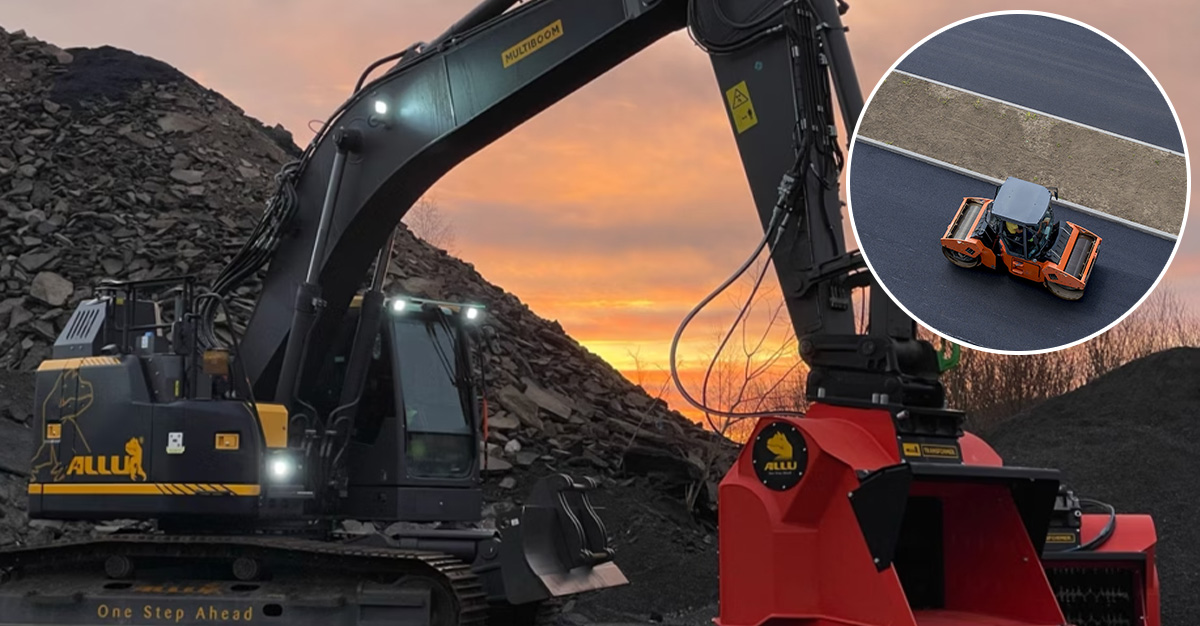
With sustainability targets tightening across Europe, reclaiming and reusing asphalt has shifted from niche practice to industry standard. At the center of this transformation are advanced material processing technologies, where companies like ALLU are pushing boundaries.
What is asphalt recycling?
The term refers to the process of reclaiming existing asphalt pavement (RAP) and reprocessing it into new road construction material. Instead of discarding milled asphalt, it is crushed, screened, and blended with fresh binders or aggregates.
Today’s methods incorporate:
- Precision screening to control particle size distribution
- On-site material processing to reduce transport emissions
- Integration with digital monitoring systems for quality control
Why asphalt recycling matters
According to the European Asphalt Pavement Association (EAPA), over 50 million tonnes of RAP are reused annually in Europe, making it one of the most recycled materials on the continent. In countries such as Sweden, the national trafic administration (Trafikverket) highlights recycling as a core strategy in achieving climate-neutral road construction by 2045.
Key benefits include:
- Reduced demand for virgin aggregates and bitumen
- Lower CO₂ emissions due to minimized transport and production
- Significant cost savings in large-scale infrastructure projects
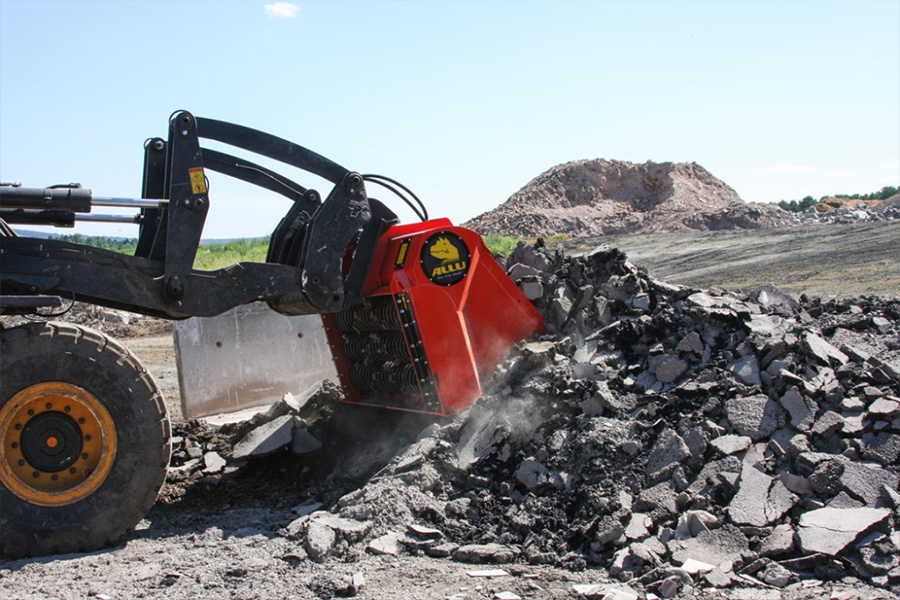
Asphalt recycling equipment: core technologies
The most critical categories include screening buckets for separating reusable fractions, crusher attachments for breaking down compacted asphalt and stabilization systems for mixing RAP with binding agents. Material processors for reuse on-site are also needed.
Unlike stationary plants, modern attachment-based systems enable in-situ recycling, which improves logistics and project timelines.
Why ALLU is a key player
ALLU has established itself as a leader in material processing attachments, particularly in the recycling segment. Their approach centers on versatility by transforming excavators and loaders into mobile processing units.
What sets ALLU apart is its ability to combine screening and crushing in a single attachment. They also focus on operation directly on-site, which reduces material handling steps. This means operators can handle wet, sticky, or mixed materials without clogging. This adaptability of equipment is crucial in asphalt recycling, where material conditions can vary widely.
Asphalt screening bucket
ALLU’s asphalt screening buckets are engineered around parallel rotating shafts fitted with screening blades. These blades create a defined gap, acting as a mobile sieve and reducing the need for additional crushing equipment.
As the drums rotate, material is lifted and conveyed, enabling separation and controlled fragmentation. Finer particles pass through the blade openings, while oversized material remains in the bucket for further processing. The system avoids excessive force, which is critical when working with asphalt, as preserving aggregate structure improves the quality of RAP.
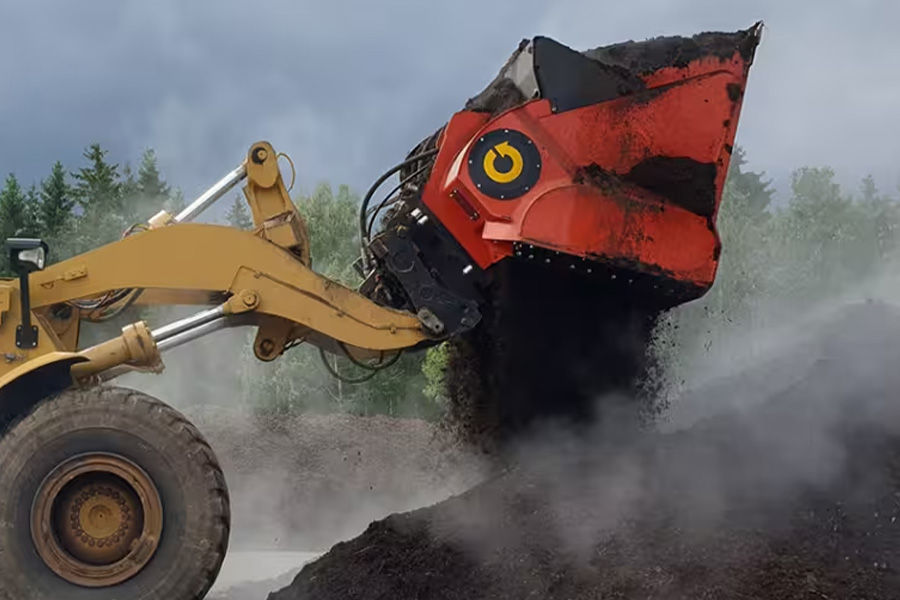
Bucket separator
While the screening bucket focuses on classification, ALLU’s bucket separators combine crushing and screening in a single process. These units are designed for tougher scenarios, such as aged, compacted, or heavily bound asphalt layers.
High-torque rotating drums reduce asphalt size while simultaneously screening material. It eliminates the need for multiple processing stages, and material is discharged only once it reaches the desired fraction size. This is why these bucket separators are effective for uneven RAP containing large or consolidated pieces.
Why these systems work so well together
What makes ALLU’s equipment particularly effective in asphalt recycling is the modular compatibility between screening buckets and bucket separators. On complex sites, they are often used in tandem where bucket separators handle primary breakdown of large asphalt sections and screening buckets refine the material into final, reusable fractions.
What to expect from asphalt recycling equipment in the future?
In the future of asphalt recycling, performance will be defined less by raw power and more by control, consistency, and adaptability. ALLU reflects this by integrating crushing, screening, and material handling into a single attachment concept that supports more efficient, on-site processing.
From an industry perspective, next-generation asphalt recycling equipment is expected to deliver higher lifecycle value through improved uptime, reduced handling steps, and more efficient use of reclaimed materials.
These are three development trends:
- Automation and smart monitoring (integrated sensors and telematics).
- Energy efficiency and electrification (hybrid and electric-powered attachments).
- Material precision and quality control (advanced blade systems and modular designs).