

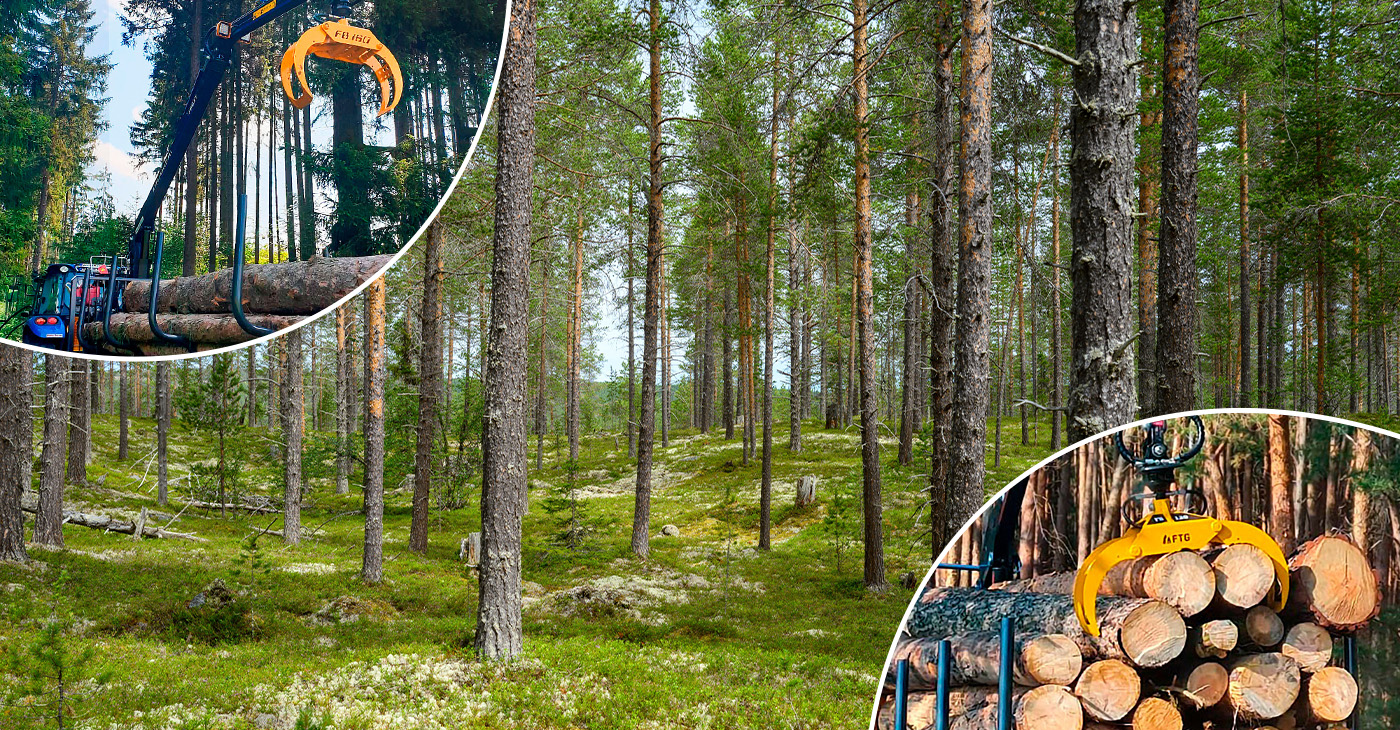
In the Nordics, forestry machinery is no longer just about large harvesters and forwarders. A shift is underway toward modular, tractor-based systems that offer lower costs and greater flexibility. At the center of this change are crane-equipped forestry trailers.
A cost structure that rewards flexibility
Nordic forestry has always been shaped by economics as much as terrain. Today, that reality is sharper than ever. According to Natural Resources Institute Finland, Finland harvested 62.2 million cubic meters of industrial roundwood in 2024, with a large share coming from private forests. These operations are often fragmented and logistically complex.
This fragmentation creates a structural challenge because moving heavy, specialized machinery between relatively small sites is expensive. Nordic research indicates that machine relocation alone can account for up to 38% of total logging costs in Sweden, reaching roughly €8 per cubic meter in conventional two-machine systems. This is where modular systems start to make economic sense.
The modern modular thinking in forestry machinery
Modular systems, where a tractor paired with a crane trailer handles multiple roles, challenge the traditional logic. By collapsing functions into a single platform, they reduce both relocation costs and operational overhead. This is supported by Nordic research, which indicates that single-machine systems can reduce relocation costs by nearly half, shifting the cost balance in favor of smaller, more adaptable setups. And here’s the bridge: once cost efficiency aligns with operational flexibility, adoption tends to follow.
Why nordic forest structure drives the shift
To understand why crane trailers are gaining traction, you have to look at ownership patterns and stand structure. In Finland, for example, the average forest holding is around 30 hectares, and typical logging sites can be as small as 1–2 hectares in thinning operations.
That scale fundamentally changes machinery requirements:
- Smaller sites reduce the efficiency of large harvesting systems
- Mixed operations (thinning + final felling) demand versatility
- Transport logistics penalize heavy, specialized fleets
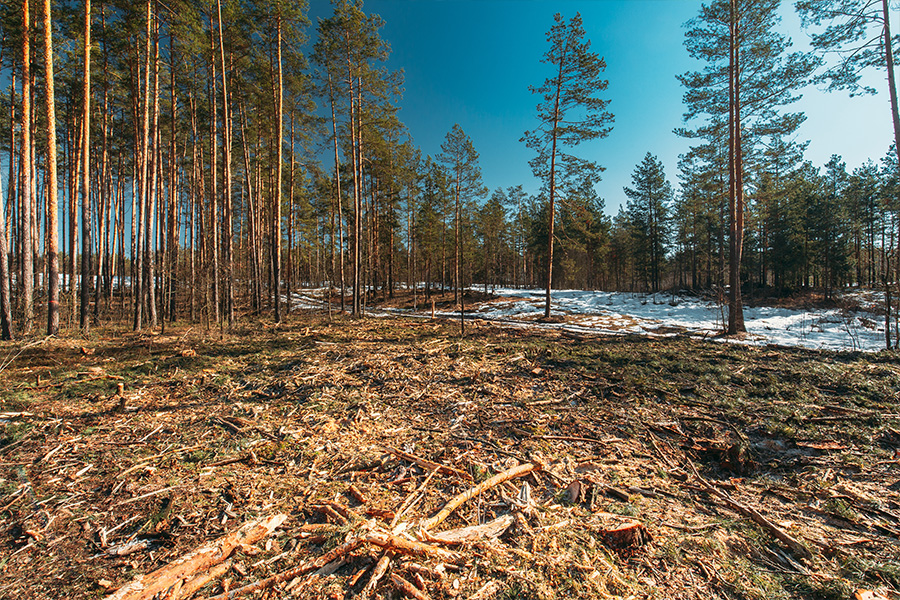
The technology behind crane trailers
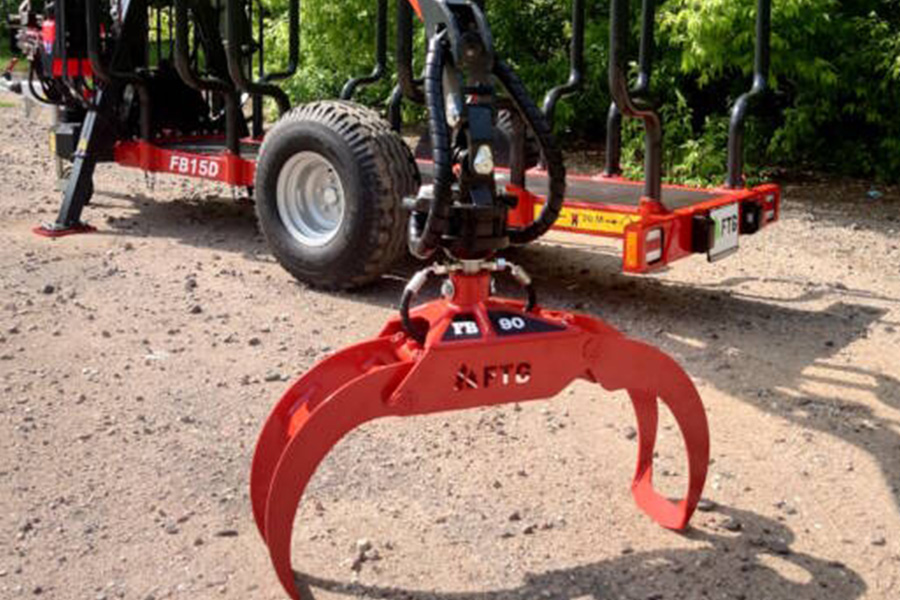
Crane-equipped forestry trailers may appear simpler than harvesters, but their performance relies on integrated mechanical and hydraulic systems. Bogie axles, often with driven wheels, provide traction and low ground pressure, while hydraulic cranes with extended reach allow precise loading without constant repositioning.
At the same time, balanced load design and tractor integration ensure stability, flexibility, and lower capital costs by using existing power units. The result is a system that prioritizes adaptability over peak output, an approach that becomes clearer when looking at how modern manufacturers put these principles into practice.
A practical example: modular design in action
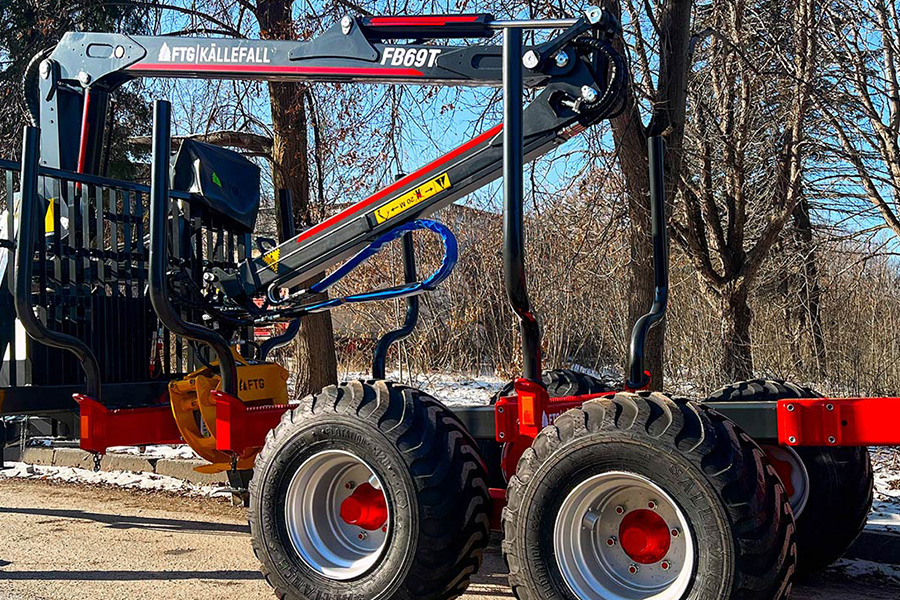
A clear example of this modular approach can be seen in forestry machinery from FTG Källefall. Their crane-equipped forestry trailers are designed to work as an extension of a standard tractor, turning it into a combined loading and extraction unit.
Hydraulic crane
With an approximate reach of 6–9 meters, the hydraulic crane enables precise loading from a fixed position, reducing the need for constant repositioning and improving overall workflow efficiency.
Bogie axles, optionally driven
These improve traction in soft or uneven terrain while distributing weight to reduce ground pressure, which is critical in sensitive Nordic forest conditions.
PTO-driven hydraulics
Power take-off (PTO) systems use the tractor as the main power source, simplifying system design and reducing both investment and maintenance complexity.
Adjustable load space
The load area can be adapted to different timber types and log lengths, making the trailer flexible across thinning operations, energy wood handling, and mixed forestry tasks.
Where modular systems work best
Forestry machinery in Nordic conditions is especially relevant in thinning operations, where maneuverability and precision matter more than raw capacity. They also fit well in small or fragmented forest plots, where transport costs quickly become a limiting factor. In sensitive environments, their lower weight helps reduce soil disturbance and ground pressure. Finally, their compatibility with standard tractors makes them ideal for multi-use operations across agriculture and forestry.
Environmental and operational synergies
Nordic forestry is influenced by environmental standards and certification frameworks. As research notes, the region’s demanding conditions, economic, ecological, and regulatory, have historically driven innovation in logging technology.
Crane trailers align well with these pressures:
- Lower machine weight reduces soil compaction
- Fewer machines on-site simplify planning and reduce disturbance
- Precision handling improves timber recovery
The strategic shift: from machines to systems
For professionals in Nordic forestry, the takeaway is clear: stop evaluating machinery in isolation. Instead, focus on total system efficiency, how well your setup handles transport, setup time, terrain, and changing site conditions. In many cases a modular solution with a crane trailer will deliver better overall economics than a traditional two-machine setup.
The competitive edge is no longer just higher output, it is choosing the right system for the job.
