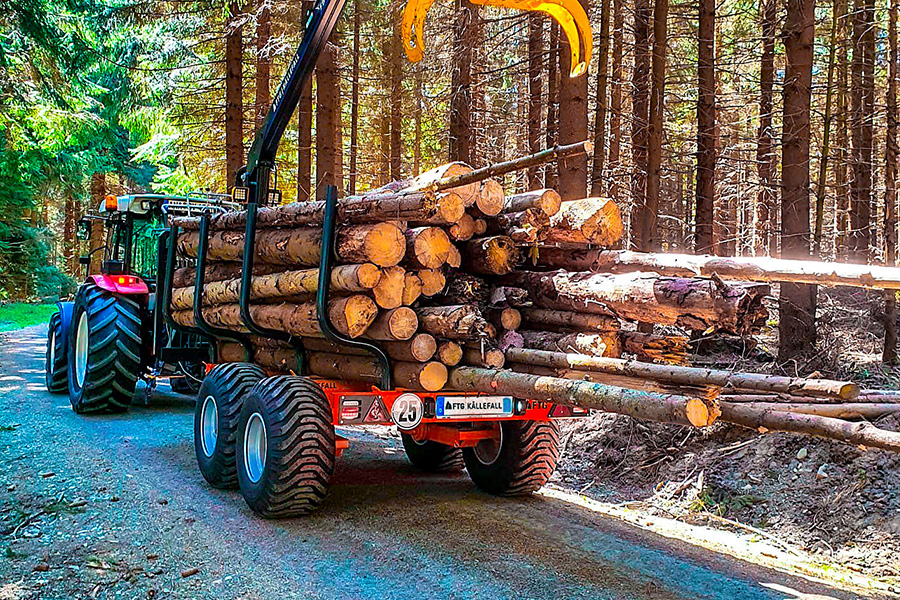


Modern forestry depends on a seamless chain of machines and logistics. Everything must work in sync — yet small inefficiencies in forestry transport can cut productivity and profits. This article explores how smarter equipment choices, crane use, and transport planning can unlock real gains across the supply chain, from roadside to sawmill.
Logging methods and stand conditions
Forestry transport performance starts before timber reaches the roadside. Logging methods, stand structure, and harvest volumes determine how smoothly timber moves through the supply chain. Even-aged stands benefit from cut-to-length systems, which create predictable assortments that simplify fleet planning. Thinning or selective operations produce mixed log sizes and dispersed landings, demanding flexible equipment and careful planning to avoid bottlenecks.

Harvesting equipment: optimising output for forestry transport
For maximum efficiency, operators must plan timber handling from felling to roadside delivery, including stacking and sorting. Harvesters that fell, delimb, and cut stems to length create standardised assortments that minimise downstream sorting. Forwarders transport timber to landings with minimal soil disturbance, but on steep or uneven terrain, feller-bunchers or skidders may be more effective than cut-to-length systems.
Key considerations for professionals:
- Match harvesting speed with forwarder capacity to avoid roadside bottlenecks.
- Pre-sort assortments by size and quality to optimise crane loading cycles.
- Use bucking strategies that reduce unnecessary handling and maximise truck payload efficiency.
Even small improvements in these areas can reduce handling steps, saving both time and fuel across the forestry transport chain. Research shows that optimizing timber transport, load utilisation, and route planning can significantly lower operating costs and reduce emissions.
Crane-equipped trailers as game-changers
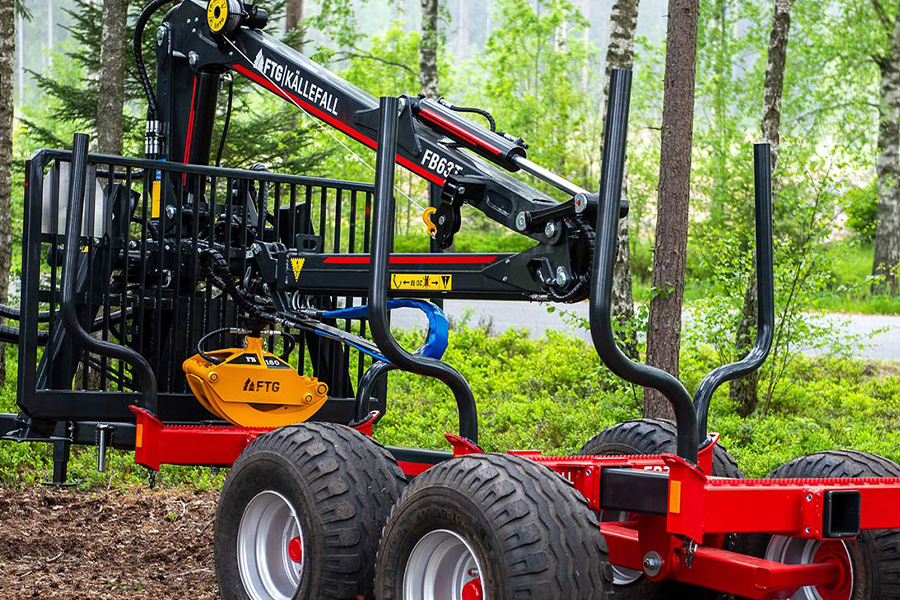
While a standard tractor can move timber short distances, it lacks the lift, stability, and cycle speed of crane-equipped trailers, which are essential for professional work. FTG Källefall trailers demonstrate this with Swedish-engineered, integrated cranes. They let operators load independently, reducing idle time and reliance on extra machinery. Their high manoeuvrability, stable crane systems, and low operating costs make them especially effective in dispersed thinning operations or small blocks, while still handling larger-scale professional workloads.
For operators, the real operational benefits include:
- Shorter loading cycles, which increase daily throughput.
- Reduced fuel and labour costs by eliminating extra handling.
- Improved safety by stabilising heavy loads on uneven terrain.
Potential consequences of transport inefficiencies
A 5–10% drop in payload utilisation or loading efficiency can significantly raise cost per cubic metre over a harvesting season. Late or irregular deliveries can leave sawmill machinery idle, directly reducing operational efficiency. Timber piling up at landings or yards creates bottlenecks, slowing workflow and raising error risk. Repeated or rushed handling also raises the likelihood of log damage, affecting both quality and market value. Underutilised trucks or extra trips further drive up fuel and labour costs without increasing output. Altogether, these factors reduce daily throughput, cutting the overall profitability of the operation.
Sawmill intake and market dynamics
Reliable forestry transport doesn’t just move timber, it directly affects production schedules, product quality, and overall efficiency.
Market-specific timber requirements
Different end markets demand specific assortments. Construction timber needs straight sawlogs; packaging and paper require uniform pulpwood; bioenergy needs fast, high-volume residues. Late or mismatched deliveries can lead to downgrading of material, extra handling costs, or production delays.
Forestry transport shapes competitiveness
Every step — from crane-equipped trailers at the landing to long-haul timber trucks — affects how efficiently timber reaches its intended market. Optimising this chain reduces costs, preserves quality, and lets operators meet market demand, boosting competitiveness.
Checklist for efficient forestry transport
- Match trailer capacity to harvest output
Avoid bottlenecks and underutilised payloads at the landing. - Select crane reach and lifting performance
Ensure smooth, safe loading for the timber types you handle. - Check hydraulic and mechanical compatibility
Tractor and crane must operate together without delays or issues. - Plan deliveries around mill demand and distance
Prevent idle sawmill time and reduce waiting or storage backlogs. - Monitor and optimise operations
Use telematics and fleet management to spot inefficiencies early.